Russel Barber
Class of 1996
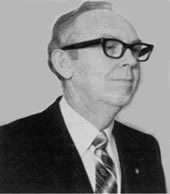
Russel Barber: A Champion for Athletics and Inclusion
For over four decades, Russel Barber dedicated his career to expanding athletic opportunities for all individuals in Huntsville. His leadership within the YMCA transformed it into an inclusive organization that ensured every aspiring athlete had a place to participate, regardless of background.
Barber’s career began as the Huntsville YMCA’s Program Director, a role he held for three years before stepping into a 39-year tenure as the YMCA’s Chief Executive Officer. His vision was clear: to make athletics accessible to everyone. One of his most impactful contributions came in 1944 when the Alabama High School Athletic Association banned girls’ basketball as a high school sport. Recognizing the need to preserve opportunities for young female athletes, Barber organized a YMCA basketball league for girls and expanded the program to a statewide level. His perseverance kept the program alive until 1970 when girls’ basketball was reinstated as a sanctioned high school sport.
Barber’s commitment to inclusion extended beyond gender. In 1965, under his leadership, Huntsville led the South in adopting an open membership policy for the YMCA, allowing individuals to participate regardless of religion, race, creed, or nationality. His efforts helped foster a culture of diversity and acceptance, setting a precedent for other organizations to follow.
Beyond his work with the YMCA, Barber was deeply involved in advocating for handicapped and mentally disabled citizens. His passion for supporting underserved communities was evident in his efforts to develop programs and facilities that catered to their needs. One of his most enduring contributions was the establishment of Camp Barber, formerly Camp Cha La-Kee, which was named in his honor in 1980 as a tribute to his lifelong dedication to youth development.
Barber’s influence on North Alabama’s athletic and community landscape cannot be overstated. His unwavering commitment to inclusion, accessibility, and sports development ensured that generations of athletes had the opportunity to participate and thrive.
This content has been generated by an artificial intelligence language model, based on original stories written the year of the honoree's induction by Board members and other contributors. While we strive for accuracy and quality, please note that the information provided may not be entirely error-free or up-to-date. Please contact the Hall of Fame with corrections.